
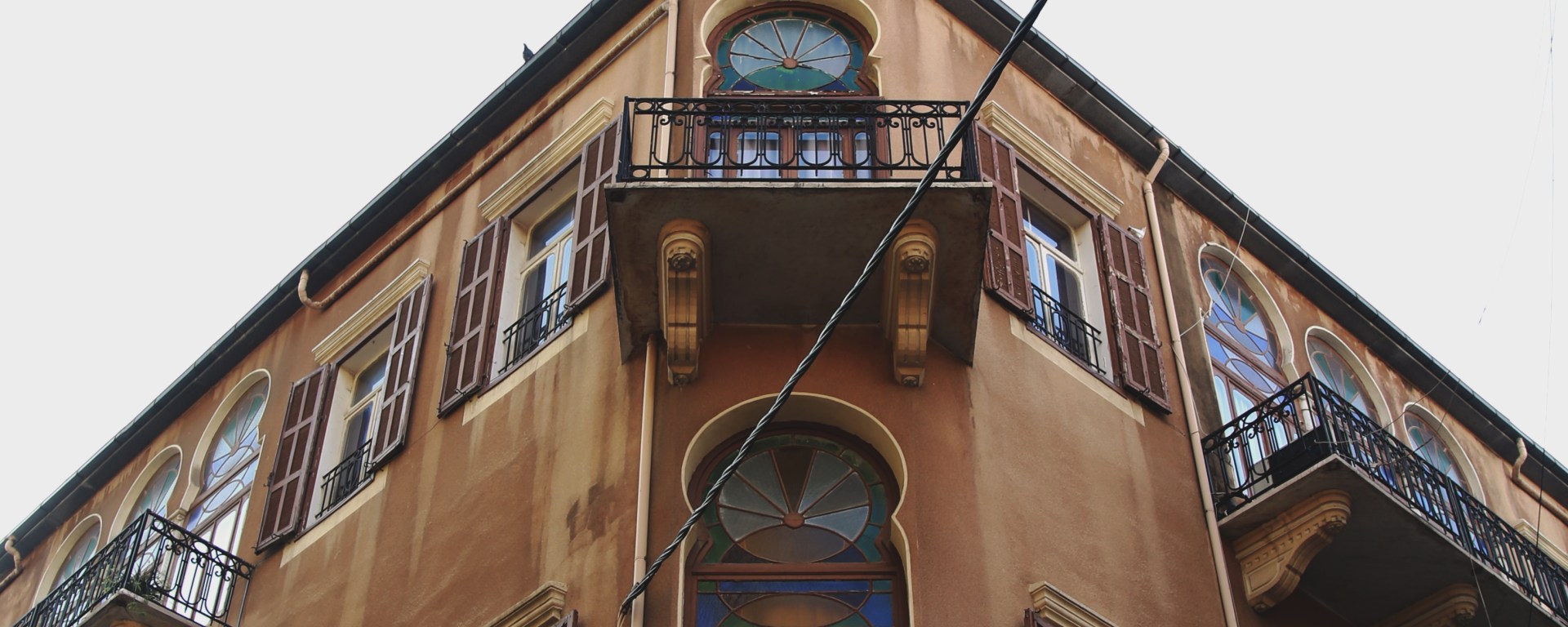
If you’re passionate about architecture, you’re just slightly interested in architecture, or even you do not give a damn for architecture. It doesn’t matter. It is just too INTERESTING to miss it.
Beirut streets are riddled with colonial buildings, mosques and churches, soviet-influenced concrete blocks and thousands of two-floored houses with a particular art-deco charm.


The Sursock Museum is one of the most beautiful buildings in Beirut. With both Venetian and Ottoman influence, this museum was previously the residence of Nicholas Ibrahim, Lebanese aristocrat who built the villa in 1912. The museum opened to the public in 1961, nine years after the passing of Mister Ibrahim, with the mission to collect, preserve, and exhibit local and international modern and contemporary art.
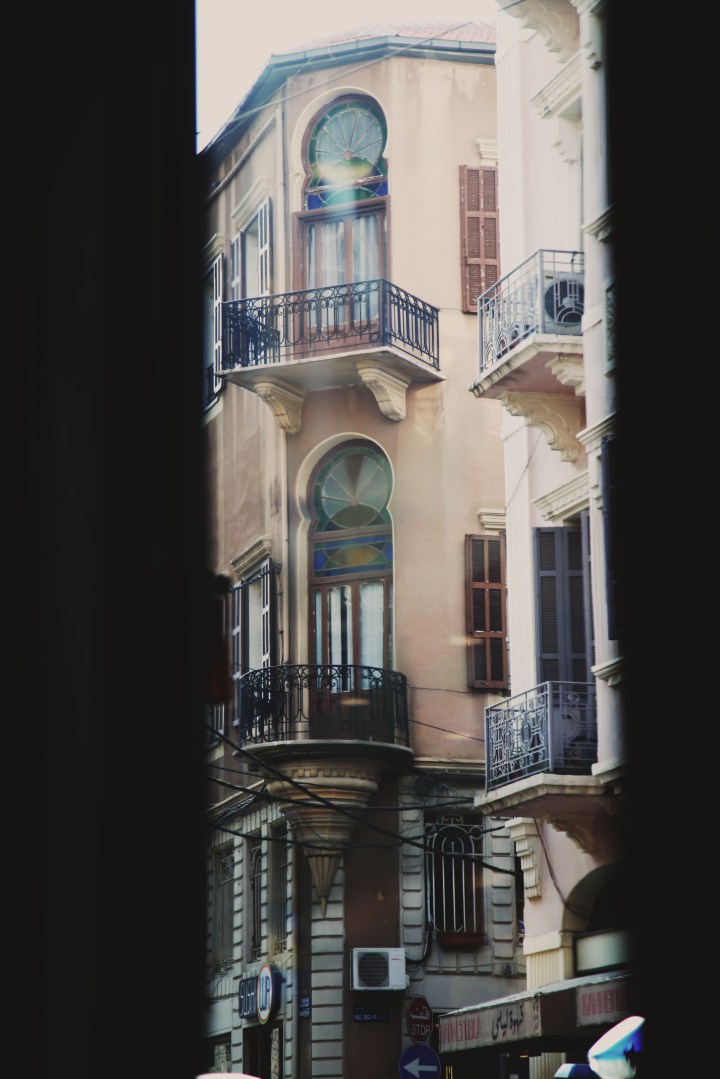
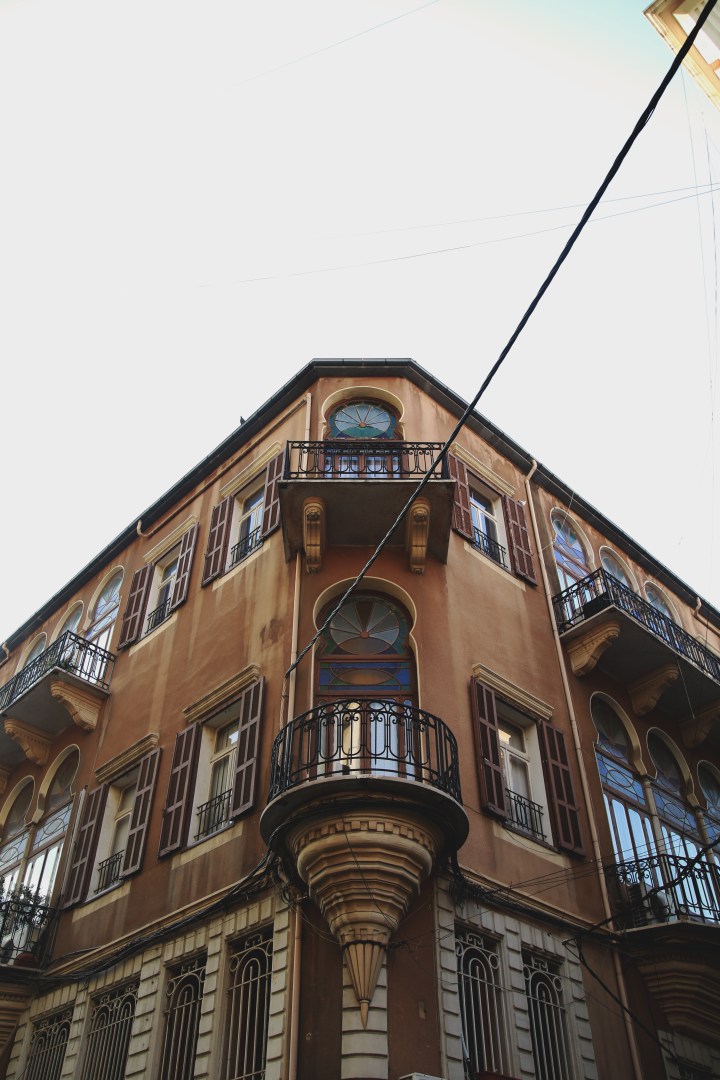
- Route Gouraud, Gemmayzeh, Beirut. July 2016.
But not all the beautiful houses faced the same fate. Beirut, the so-called “Paris of the Middle East” is turning into either an irrecoverable vestige of old times or a new “Dubai of the Levant”. After the 15 years of Civil War and the global financial crisis, the building fabric in the country is being controlled by speculative property developers, willing to make the most of the territory, by destroying most architectural pearls, winning right away a new combat against architects and civil society activists. Most of the art-deco buildings constructed during the French colonial Époque, with maximum three or four floors each, are being replaced by massive skyscrapers.

- New constructions in Gemmayzeh, Beirut. July 2016.
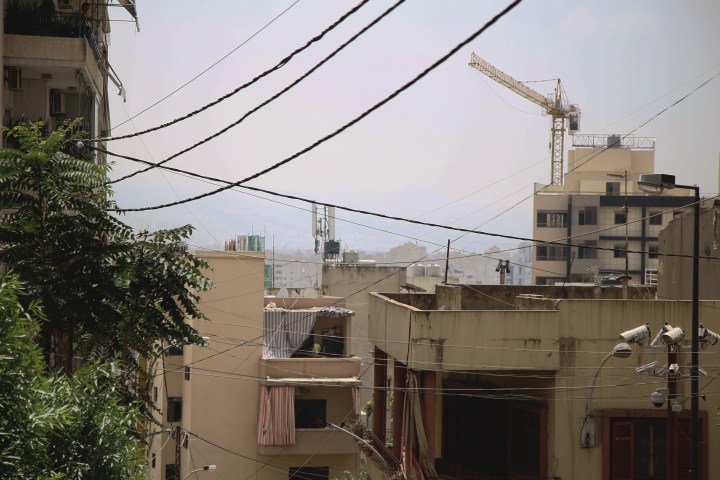
- Views of the city from Sassine square, highest point of the city. Beirut. July 2016.
While admiring the beauty of the surviving art-deco houses in the city center, one question keeps on coming back and forth: why so neglected?

- Rue Boutros Dagher, Gemmayzeh. Beirut. July 2016.
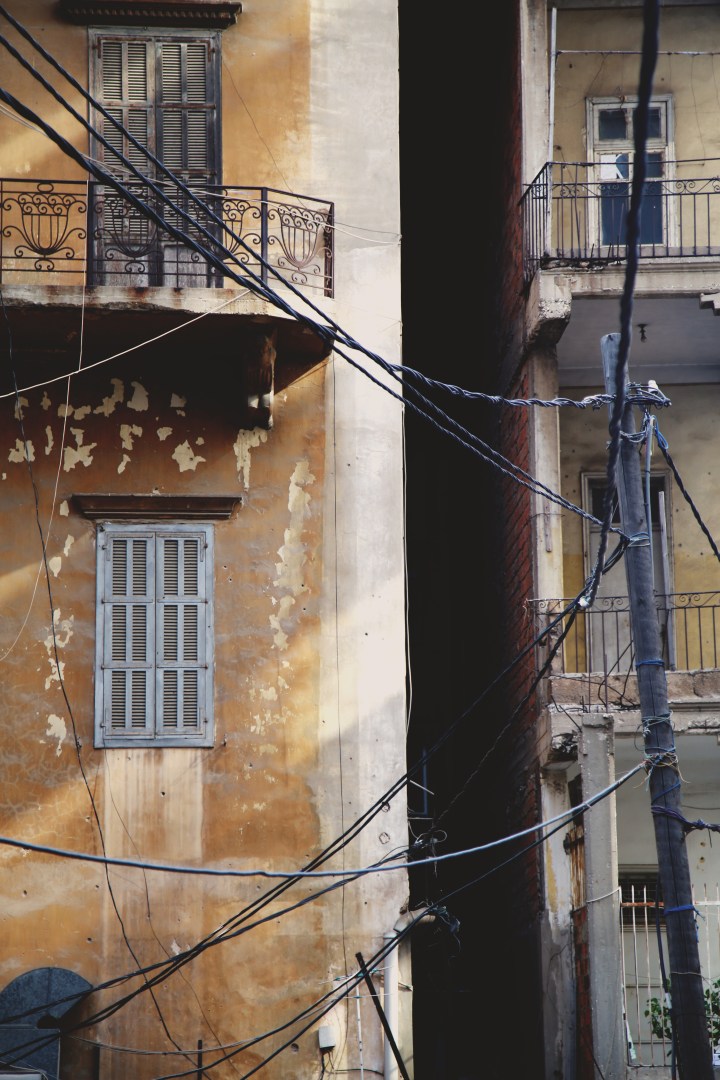
- Old buildings in Gemmayzeh. Beirut. July 2016.
It’s all a matter of regulation: the Temporary Law No 160.
Promulgated on the 23rd July, two years after the end of the Civil War, this Act regulates all rental contracts signed before this date, meaning the tenant has the right to continuously renew the contract for the lifetime of Law 160. The rent increases follow a predetermined formulae, not at all linked to the real state market.
It is supposed to be a neutral law between landlords and tenants. However, the process in court to evict a non-paying tenant takes up to two years, turning the process into worthless for landlords. The low rents and the difficulties to evict debtors imply landlords not being worried about the state of the housing, the building or the infrastructures. Most of them are dying to sell their properties to real state agents that will make out of their cute colonial apartment a heartless office or a luxurious hotel. Tenants, for its part, are divided.


Those who signed their rental contract before 1992, are not interested in moving, nor improving the situation. Those who signed their rental contract after 1992, i.e. all new generations, are facing inflated prices and a renegotiated contract each three years, up to the landlord, following the path of inflation.
Therefore, a new trend is being observed within the youth in the city center, forced to move after 3-6 (max. 9) years of rental to a new neighborhood where housing is still affordable.

The only neighborhood that seems to stay away of this race for a living is Hamra. Home of several international universities, it is probably one of the most diverse and cosmopolitan areas in the city, while keeping the natural attractive of the old city and, of course, senior citizens. Given that students are normally hosted in this neighborhood, rent prices are pretty stable and the inhabitants are very dynamic.
Meanwhile, four different neighborhoods have disputed the first place of artsy cool area in the city during the last (approx.) 15 years: Mar Mikhael, Gemmayze, Achrafieh and Monot. (Visit our Guide to Beiruti neighborhoods to get to know them)
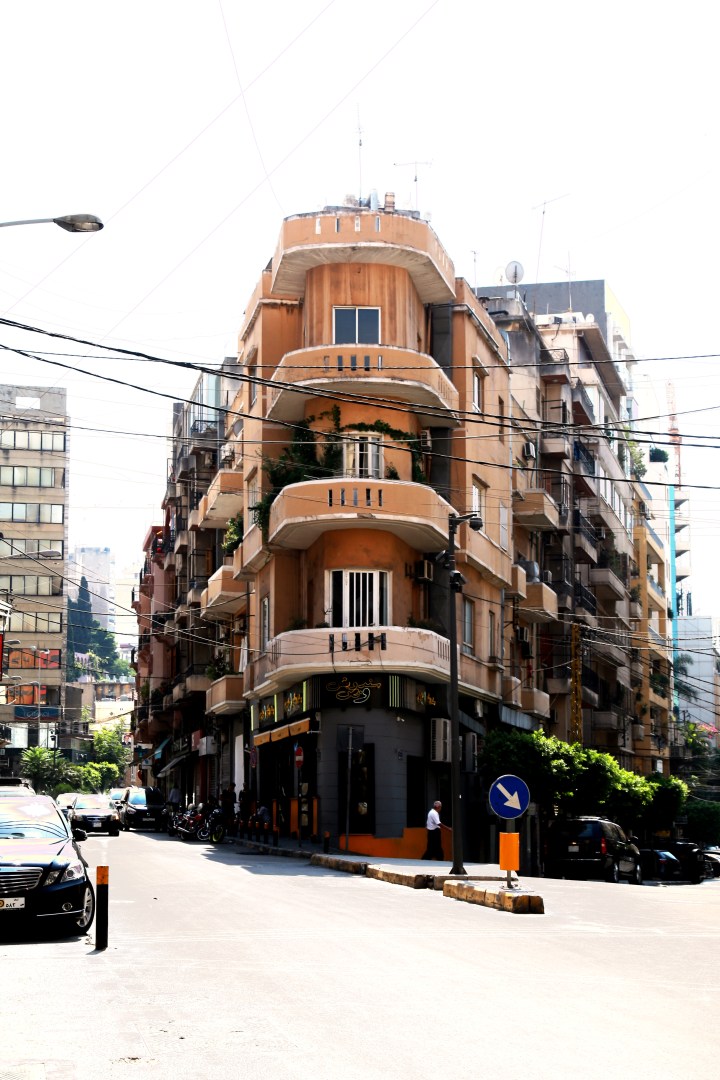
- Streets of Gemmayzeh. Beirut. July 2016.

- Old buildings in Achrafieh, Beirut. July 2016.
Laying aside the neighborhood race for the “cool cat” trophy, other traditional neighborhoods (mostly in Downtown Beirut) such as the area of old Beirut Souks, Saifi Village or Zaytuna Bay have suffered from the effect of the luxurious Middle Eastern fever.
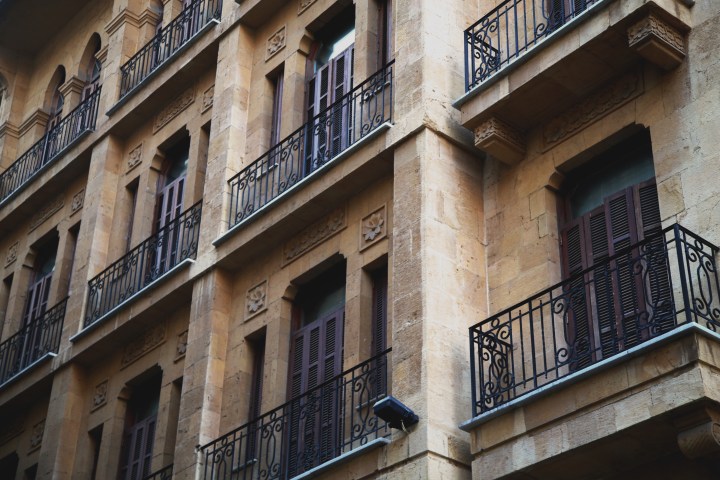
- New buildings in Al Maarad street, Saifi. Beirut. July 2016.
Real state agents have seized their opportunities and they seem to have started their own race to build the highest building in the city. In Lebanon there are no restrictions. How’s this possible? Well, the current law allows building constructions in Beirut to reach 50 meters in height. If the project is to exceed these regulations, then the developer must apply for an exception, vaguely regulated in the Construction Law 646/2004, and therefore pretty easy to obtain.
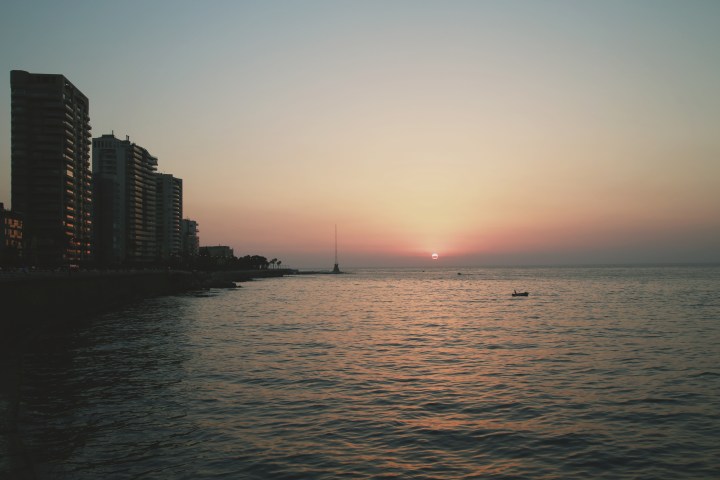
Most of these buildings were constructed during the years after the Civil War. Rafiq Hariri, the president at the time, consolidated most of the properties in the severely damaged area of Downtown by offering the thousands of owners shares in the privately owned construction cooperation for the development of the area. This was the “Solidere” plan, and it’s how the government received almost 100% control of the area. Over 2000 buildings were removed and replaced by modern and “chic” real state buildings, even though the area is far from the entire reconstruction. The areas that haven’t been replaced yet let us imagine the situation of the city before the Civil War.
Particularly, the “Egg”, or Dome City Center. This is an ancient building located near Martyrs Square, intended to be the first and biggest cinema in Lebanon in the late 50’s. The war caused big damage and most of it was destroyed. However, it has become a symbol for the people.

- “Electricité du Liban” designed by the Brazilian architect Pierre Neema in 1966, Beirut. July 2016.
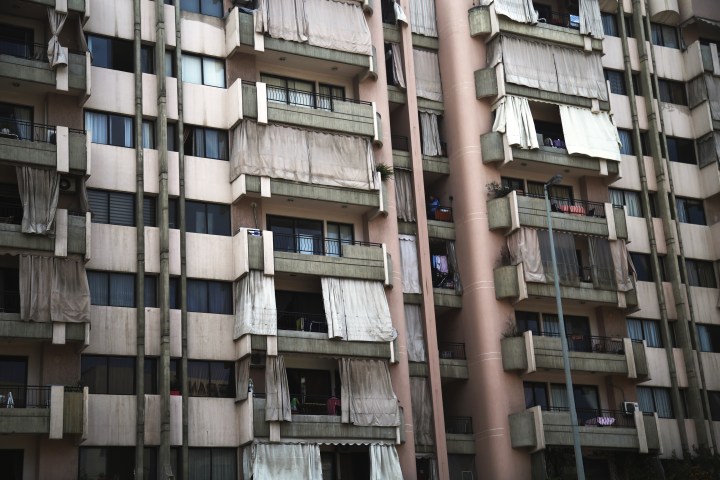
While ones try to grow high, others try to survive. Massive pieces of concrete were used to reconstruct the city in another less touristic areas, giving us the image of soviet-inspired highly contrasted buildings.
In terms of religious buildings, everything is possible. From a hidden cosy chapel to the most monumental mosque located in the middle of a main street, architecture leaves nothing to be desired.
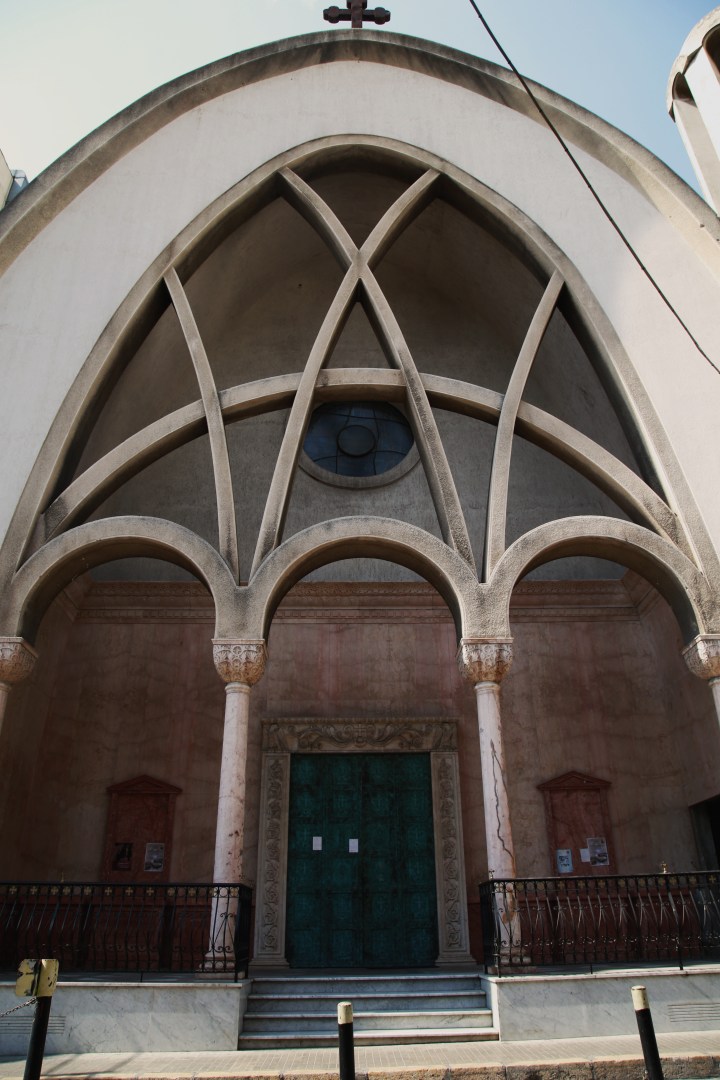
- St. Antoine Greek Catholic Church, Gouraud Street, Gemmayzeh. Beirut. July 2016.
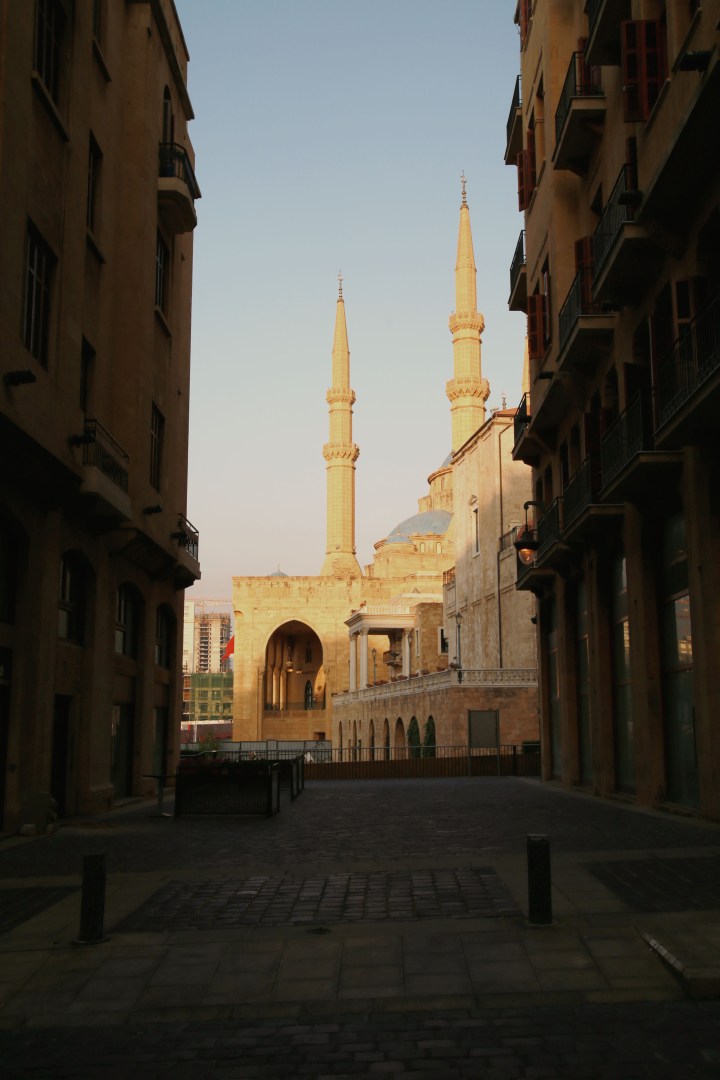
- Views of Mohammad Al Amin Mosque from Nejmeh Place, Saifi Village. Beirut. July 2016.
The beauty of contrasts and the complexity of the built fabric turns the city into a trap for architecture lovers, while it doesn’t get no one untouched by the diversity and the added story. Still, there’s much to be done to preserve the magic of the city. Instead of constructing French-influenced new properties and massive complexes for high-demanding Middle Eastern tourists, a deep restoration work should be carried out not to lose what this city tells you just by wandering its streets.
 BEIT
BEIT 
Thanks for an interesting read! Beirut is certainly a special place:)
LikeLike